
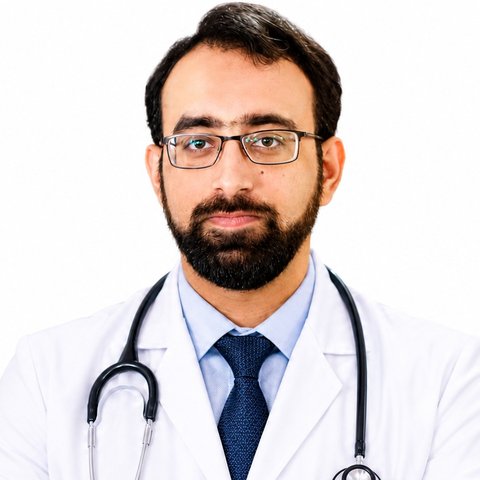
Dr. Ahmad Sajjad
MBBS, MSc Pain Medicine, Diplomate American Board of Regenerative Medicine (DABRM), MS Ortho (Training Complete)
Interventional Pain Physician
Pain clinic · Iqbal Memorial Hospital
Relief from long-standing joint, spine and tendon pain, often without an operation.
Early to moderate osteoarthritis, cartilage wear and sports knee injuries.
Low back pain, disc problems and pain travelling down the leg.
Cervical spondylosis, muscle spasm and pain going into the arm.
Frozen shoulder, rotator cuff problems and shoulder stiffness.
Painful tendons around the elbow that have not settled with rest.
Plantar fasciitis and Achilles tendon pain.
PRP (platelet-rich plasma) uses your own blood. Platelets carry natural healing factors; concentrating them and placing them at the injured area helps the tissue repair itself.
A little blood is taken from your arm, as for a routine test.
The machine separates the platelet-rich plasma from the rest of the blood.
The PRP is injected into the painful joint or tendon. You go home the same day.
For knee osteoarthritis, tendon and ligament problems (tennis elbow, plantar fasciitis, rotator cuff) and sports injuries. Usually one to three sessions, a few weeks apart.
Medicine placed directly at the source of pain in the knee, shoulder or spine, to calm inflammation and allow physiotherapy.
Injections that quieten an irritated nerve for neck, back, shoulder and leg pain.
Exercises and therapy after your procedure, to build strength and keep the pain away.
Every patient is examined first. The doctor checks your X-ray or MRI and advises whether a procedure is suitable for you. Results differ from person to person.
MBBS, MSc Pain Medicine, Diplomate American Board of Regenerative Medicine (DABRM), MS Ortho (Training Complete)
Interventional Pain Physician
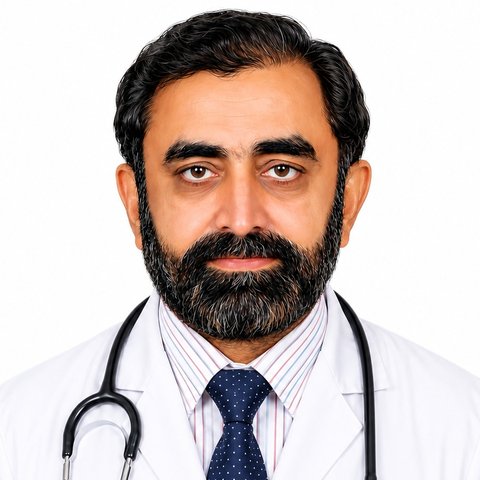
MBBS, D.Ortho, MSc Pain Medicine, Fellowship in Interventional Pain Practice (FIPP), Diplomate American Board of Regenerative Medicine (DABRM)
Interventional Pain Physician & Orthopaedic Surgeon
You may feel pressure and some soreness for a day or two after the injection. Local anaesthetic is used where needed.
Steroid and nerve-block injections can work within days. PRP works by healing, so improvement usually builds over a few weeks.
No. Most pain procedures are done in the clinic and you go home the same day.
Your previous X-ray, MRI or CT films and reports, and a list of the medicines you take, especially blood thinners.
Many patients avoid or delay surgery with these treatments. If an operation is the better option, our orthopaedic surgeons will explain why.
Open 24/7. Bring your X-ray or MRI if you have one.